OUR STRATEGY IN ACTION
- SUSTAINABILITY STRATEGY IN ACTION
- GROWTH STRATEGY IN ACTION
 |
The key pillars of our sustainability include delivering to our beneficiaries, financial strength and durability, maintained product relevance to customer experience, regulatory compliance and adequately skilled human resources. In summary, a business has to stay in business to be able to take advantage of the commercial opportunities that are presented to it. Good businesses fail when they are fragile, inflexible, unethical or poorly managed. |
||||||
SUSTAINABILITY STRATEGY IN ACTION |
|||||||
|
|||||||
CSI OUTCOMES 253 education, health and welfare |
 |
DELIVER TO OUR BENEFICIARIES |
|
||||
GROUP NET 2.4 times |
 |
FINANCIAL STRENGTH AND DURABILITY |
|
||||
GUEST 88% |
 |
PRODUCT RELEVANCE TO CUSTOMER EXPERIENCE |
|
||||
FINES IMPOSED FOR Nil |
 |
REGULATORY COMPLIANCE |
|
||||
VERIFIED 5.3% as a percentage of payroll |
 |
SKILLED HUMAN RESOURCES |
|
||||
 DELIVER TO OUR BENEFICIARIES
Approach
As a responsible corporate citizen with a rich South African heritage, we aim to ensure that a portion of the economic benefits of ownership flow to community, charitable or socially beneficial organisations. This is achieved through meaningful citizenship programmes and through direct and indirect equity ownership and employment.
2020 performance
Shareholders
As mentioned in the group overview, the nature of the HCI shareholding is of particular importance as it provides the bulk of the 75% broad-based empowered ownership at group level. HCI has provided a stable shareholder base for a number of years, which has allowed the group to grow and take advantage of opportunities. The balance of the shareholding is diverse with adequate liquidity.
Community
Tsogo Sun Hotels continues to be committed to uplifting and developing communities in need, spending a portion of our profits annually on social investment in three primary areas, namely community development, entrepreneurial development and the natural environment. We effectively harness our resources, geographic spread and experience to support initiatives that create a lasting and positive impact on the communities we operate in. However, with the deactivation of the group’s hotels, all community investment and sponsorship activities were suspended at the end of March 2020. Remote business support continued to be provided to registered beneficiaries of the Tsogo Sun Entrepreneurs programme during the COVID-19 National Lockdown.
Community development
During the year, the group’s social investment in community development amounted to R11 million, all of which is verified spend on B-BBEE socio-economic development. This is equal to 9% of net profit after tax and represents 8pp more than the tourism sector code target.
Tsogo Sun Hotels supports its local communities in education, health and welfare through financial donations and in-kind contributions (such as venues, accommodation, food, linen, furniture, equipment and prize letters). Over the past year, Tsogo Sun Hotels supported 253 non-profit organisations, schools, homes for the aged, orphanages, shelters, hospices and health facilities, and provided relief when disasters, such as the KwaZulu-Natal floods, occurred.
Ongoing tracking of all contributions is conducted to evaluate the benefit received by beneficiaries and the sustainability of the organisations supported, and to identify where emphasis needs to be adjusted for improved results.
KEY PERFORMANCE INDICATORS
| 2020 | 2019 | ||
|---|---|---|---|
| Black ownership | 75% | 63% | |
| Value added contribution to black economic empowered businesses, previously disadvantaged individuals and government | R3 075 million | R2 624 million | |
| B-BBEE level | Level 1 | Level 1 | |
| CSI outcomes | Tsogo Sun Hotels supported 253 education, health and welfare organisations | Tsogo Sun Group’s sports, arts and learning academies supported 30 149 learners(1) | |
| Enterprise and supplier development outcomes | Tsogo Sun Entrepreneurs programme supported 162 beneficiaries | Tsogo Sun Entrepreneurs programme supported 259 beneficiaries |
| (1) | Subsequent to the unbundling of Tsogo Sun Hotels in June 2019, the previously reported sports, arts and learning academies including the school coding and chess programmes were absorbed by Tsogo Sun Gaming. |
Enterprise and supplier development
Through the Tsogo Sun Entrepreneurs programme, Tsogo Sun Hotels develops emerging enterprises with the potential to form part of our procurement pipeline. The programme currently provides business mentorship, leadership coaching and a range of business benefits to 162 enterprises in various industries across South African. A valuable part of the programme is the University of Cape Town’s small business management course, funded by Tsogo Sun, in which all successfully inducted candidates are enrolled. Some success stories of the businesses supported by the programme are documented in a series of short films. The series called The Legacy Series is broadcast on the Tsogo Sun Entrepreneurs YouTube channel.
Tsogo Sun Hotels’ spend on enterprise and supplier development for the year was R4.3 million, of which R660 000 was spent on enterprise development beneficiaries and R3.6 million on supplier development beneficiaries, representing 3.4% of net profit after tax, which is 0.1pp below the tourism sector code target.
Tsogo Sun Volunteers
Tsogo Sun Hotels’ employee volunteer programme enables people employed by the group to actively give their time and expertise to those living in less fortunate circumstances. During the year, Tsogo Sun Volunteers demonstrated caring spirits around the country, in big and small ways, identifying needs and getting involved in initiatives that uplift the lives of others. Campaigns supported included Mandela Day, Reach for a Dream Slipper Day, Casual Day, Tekkie Tax Day, the CANSA Shavathon and PinkDrive breast cancer education and awareness.
Transformation
Tsogo Sun Hotels considers itself to be a pioneer in transformation and a leader in the empowerment of previously disadvantaged individuals, businesses and communities in South Africa. The group currently has a level 1 B-BBEE contributor status, measured against the dti’s revised codes of good practice – tourism sector scorecard, and complies with the related guidelines.
The formal verification audits are performed annually by an accredited economic empowerment rating agency with the consolidated group results for the year ended 31 March as follows:
| B-BBEE results | Target score on revised codes – tourism |
2020 | 2019 | ||
|---|---|---|---|---|---|
| Ownership | 27 | 27.0 | 27.0 | ||
| Management and control | 19 | 12.8 | 12.2 | ||
| Skills development | 20 | 17.2 | 18.4 | ||
| Enterprise and supplier development | 40 | 35.7 | 38.1 | ||
| Socio-economic development | 5 | 8.0 | 8.0 | ||
| Overall | 111 | 100.7 | 103.7 | ||
| Rating level | Level 1 | Level 1 |
The group is proud to be a level 1 B-BBEE contributor with 135% procurement recognition status for 2019 and 2020 and we have worked hard to implement our empowerment strategy to achieve this. The group received 100.7 out of a total available 111 points on the tourism sector scorecard. Tsogo Sun Hotels’ black ownership is verified at 75% and black women ownership is 41%.
Industry bodies
Tsogo Sun actively participates in business and industry bodies such as the TBCSA, the South African Tourism Board (‘SATB’), the National Business Initiative, Proudly South African and the Fedhasa. Our participation includes management’s time, effort and intellect. The group also forms relationships with national and regional tourism associations.
Tenants
The delivery of quality hospitality, dining and conferencing experiences is important to staying relevant in our market and satisfying our customers’ diverse requirements. With a total of 113 tenants across Tsogo Sun Hotels’ various properties, tenanting is a core focus area to ensure that our guests have access to the best office, retail, restaurant and entertainment-related offerings. Revised terms are being arranged with the group’s tenants in response to COVID-19 National Lockdown regulations. These will be assessed and adjusted as the situation develops.
Suppliers
The group has developed long-term, mutually beneficial relationships with our suppliers of goods and services. Through these supplier relationships, many more indirect jobs are created and wealth is generated in the economy.
A growing portion of our procurement is centrally managed, which allows for enhanced consistency in standards and pricing, and closer relationships with our suppliers. We ensure that, as far as practically and commercially possible, our operations procure products from vendors who are located in the same areas
Tsogo Sun Hotels encourages diversity in its commercial associations, particularly through the involvement of previously disadvantaged individuals and local businesses. We support black-owned businesses in South African through a focused procurement strategy. Verified total procurement spend on black economically empowered businesses amounted to R1.5 billion during the year. The group’s B-BBEE score for preferential procurement, which is measured within the enterprise and supplier development element, is 20.3 out of 25. Our focus areas are procurement from black women-owned businesses and further opportunities to establish and support enterprise and supplier development initiatives through procurement.
An additional procurement consideration is the environmental performance of our suppliers, which is considered as part of our procurement criteria during the supplier selection process.
In light of the National Lockdown regulations as a result of COVID-19 and the deactivation of the hotels at the end of March 2020, the group negotiated reduced or extended payment terms with major suppliers, particularly those providing fixed cost services such as security and lift maintenance. Municipal rates and taxes are a material fixed monthly cost for the group and, while we currently continue to meet these obligations, we are lobbying government through industry bodies to grant a deferral or payment holiday. Contractual variable costs with suppliers were reduced to nil until trading resumes by extending the period of the contracts.
Third-party owners
The group leases hotel properties and manages hotel businesses on behalf of third-party owners where it does not own the property or the business. Our significant management relationship is with Tsogo Sun Gaming for which we manage 17 hotels located within various casino precincts. The relationships are mutually beneficial with financial returns, access to additional properties for Tsogo Sun Hotels and enhanced returns to the owners through our management skill and distribution.
As mentioned in the strategic review here, the group is seeking rent relief from landlords for the period of the lockdown and subsequent low demand periods. Negotiations in this regard are ongoing.
Environment
While our main business activities pose limited risks to the environment due to the service nature of the industry, we are subject to the general impacts of climate change, as evidenced by the severe water shortages in the Western Cape in 2018 as well as the recent storm surges that caused damage to the Paradise Sun in the Seychelles. The group recognises that using natural resources responsibly is important to its long-term sustainability. As such, the group is committed to reducing the impact that the business has on the environment and to encouraging guests to embrace greener behaviour for the wellbeing of the environment. Environmental management practices are also integrated into our operations. The group reports to the CDP and Water Disclosure Project as a subsidiary of HCI.
Our efforts to manage our business sustainably serve the interests of our communities and other stakeholders. To achieve this, our stated policy and commitment is to:
- Ensure that, at all times, we identify, evaluate and comply with local, regional and national environmental laws and regulations applicable to our operations within the areas we conduct business
- Continuously evaluate and manage our environmental risks, targets and objectives
- Actively seek to minimise pollution, emissions and effluents emanating from our operations
- Work towards minimising waste by reducing, reusing and recycling programmes and adopting a zero waste policy
- Strive to reduce consumption of natural resources by using energy, gas and water responsibly, and the identification and implementation of sustainable energy solutions
- Manage biodiversity through protecting flora, fauna and land associated with or impacted by our operations
- Communicate our policies and achievements openly and transparently to our stakeholders
- Collaborate with our suppliers and business partners to actively reduce the environmental impact of our business activities
- Continuously improve and innovate our environmental performance standards
- Annually report on our environmental performance
- Provide support for the sustainable development of our communities
To ensure the objectives of our environmental programme are met, a property-specific environmental management system is in place at all of our hotels, aimed specifically at energy, water, waste management and responsible procurement. The system is holistically managed as part of the in-house Organisational Resilience Management Standard audit process, and is verified by the German quality body, DQS-UL Group.
Scope and boundaries of emissions measurement
Scope 1 and 2 emissions are reported for all owned businesses located at properties owned or leased by the group in South Africa and offshore, excluding emissions relating to tenants. Tenant emissions at owned or leased properties, emissions at properties not owned but managed by the group, emissions from outside laundry services provided to the group and business travel emissions are reported in scope 3. Fugitive emissions, mainly from refrigerants, were not measured as they are not significant and there are no other emissions that are considered material.
Emissions measurement
| Total emissions (tCO2e) | 2020 | 2019 | % change on 2019 |
% change on like-for-like portfolio |
|
|---|---|---|---|---|---|
| Scope 1 | 3 955 | 3 675 | 8 | 5 | |
| Petrol and diesel (owned company vehicles) | 230 | 271 | (15) | (15) | |
| Diesel consumed (owned businesses) | 1 546 | 1 201 | 29 | 23 | |
| Liquefied petroleum gas (‘LPG’) and natural gas usage (owned businesses) | 2 179 | 2 203 | (1) | (2) | |
| Scope 2 | 83 187 | 86 233 | (4) | (9) | |
| Energy consumed (owned businesses) | 83 187 | 86 233 | (4) | (9) | |
| Scope 3 | 69 019 | 76 101 | (9) | (3) | |
| Energy consumed (tenants) | 37 883 | 39 890 | (5) | (5) | |
| Energy consumed (managed properties) | 14 229 | 19 204 | (26) | (3) | |
| Laundry services (outsourced) | 16 273 | 16 121 | 1 | 1 | |
| Business travel | 634 | 886 | (28) | (28) | |
| Total emissions (tCO2e) | 156 161 | 166 009 | (6) | (6) |
Electricity consumption creates 95% of scope 1 and 2 emissions hence its demand-side management remains a focus area for the group in reducing emissions. At group properties and properties managed by the group, 96% of scope 3 emissions from tenants also arise from electricity consumption.
Electricity
Scope 2 emissions from electricity consumption at the group’s owned properties were 4% down on the prior year at 83 187tCO2e, despite the inclusion of the three Sandton Consortium hotels (Sandton Sun, Sandton InterContinental Towers and Garden Court Sandton City) which were categorised as owned from November 2019. Excluding inorganic growth, emissions reduced by 9% on the prior year due to ongoing energy-saving initiatives and a significant decrease in trading volumes in the last quarter of the financial year. The installation of energy-efficient equipment continues where practical although much has been done since 2006. The majority of the consumption reductions are as a result of consumption measurement and behavioural change initiatives at the properties.
LPG and natural gas
LPG and natural gas are primarily used for cooking with limited space heating and water heating at three properties. Scope 1 emissions from the consumption of LPG and natural gas decreased by 1% to 2 179tCO2e mainly due to reduced trading volumes and the resultant reduced restaurant covers during the year. Excluding inorganic growth, emissions reduced by 2% on the prior year.
Petrol and diesel – vehicles
Scope 1 emissions from the consumption of petrol and diesel in company-owned vehicles decreased by 15% to 230 tCO2e due to tight expense control.
Diesel – stationary
Diesel is utilised for back-up electricity. Scope 1 emissions from the consumption of diesel increased by 29% to 1 546tCO2e due to significant increased load shedding and supply interruptions during the year. Excluding inorganic growth, emissions increased by 23% on the prior year.
Scope 3 emissions
The 5% decrease in scope 3 emissions from tenants at group properties is mainly due to ongoing savings initiatives. The 26% reduction in scope 3 emissions from properties managed by the group is mainly due to the inclusion of the three Sandton Consortium properties for only seven months prior to being transferred to owned. The group utilises outsourced laundries at the majority of its owned and managed properties. Scope 3 emissions from laundry services were 1% up on the prior year consumption.
Water
Although supply interruptions due to poor municipal infrastructure continue to increase and medium-term water shortages are probable, the group does not have company specific water risks. Contingency plans for the hotels in Cape Town, such as reverse osmosis of brackish water and boreholes with water treatment plants, are in place. However, realistically, a solution must be provided on an industrial scale by government as there is little point in the hotels having access to potable water if the region does not. The majority of the group’s properties are in urban areas and use potable water provided by local municipalities (85% of consumption). Two resort properties use surface water for irrigation and two resort properties are fully reliant on river water. Water consumption at the group’s owned properties increased by 4% to 1.4 million kilolitres during the year, mainly due to the inclusion of the Sandton Consortium properties offset by ongoing conservation and reduction measures at all properties.
Waste management
Our efforts to divert waste from landfill are in progress at most of our properties. These efforts include focusing on staff training and partnering with waste contractors who are committed to zero waste to landfill practices. In this regard, a trial project was conducted at a number of units with a system that uses a combination of enzymes and probiotics, resulting in the diversion of a significant amount of food waste to composting. All four-star and five-star guest amenities, such as bottled shampoos, conditioners and body washes, were also changed to 100% reground polyethylene terephthalate bottles, which are 100% recyclable. The reduction of waste starts with the purchasing policy, which will be under consideration in the following year, along with encouraging tenants at our properties to participate in our waste reduction and diversion from landfill strategy.
Biodiversity
The majority of our properties are in urban areas and are therefore not in close proximity to sensitive environments. There are four resort properties in rural environments where management of biodiversity is more important and no new facilities were developed at these properties during the year. The properties have programmes in place to remove alien vegetation and, where applicable, this is replaced with indigenous plants.
Environmental education
As part of our efforts to be a good corporate citizen, Tsogo Sun Hotels encourages local communities to adopt a responsible attitude towards the use of electricity and water and the management of waste. The group also champions opportunities to inform people about the importance of reducing their impact on the environment by organising clean-ups, tree planting and urban improvement projects.
During the year, Tsogo Sun Hotels partnered with the Miss Earth South African leadership development programme, which works to raise awareness and educate young South Africans about environmental issues. Through this partnership, about 180 different schools in underdeveloped areas across South African were engaged on subjects of environmental responsibility, climate change, food security and the green economy.
Looking ahead
Community development
Once normal trading has resumed, Tsogo Sun Hotels intends to continue supporting local communities in education, health and welfare through financial donations and in-kind contributions (such as venues, accommodation, food, linen, furniture, equipment and prize letters), and to monitor the impact thereof by tracking donations and measuring their benefits.
Enterprise and supplier development
The group’s enterprise and supplier development programme, Tsogo Sun Entrepreneurs, will continue to actively address the need for business development support for emerging South African enterprises. With the one-year development course, the entrepreneur of the year award, provincial supplier showcase exhibitions, the annual entrepreneurs’ conference, The Legacy Series and the alumni mentorship programme as its framework, the programme is well positioned to continue to serve the group’s needs as well as those of the entrepreneurs that it supports, once normal trading resumes.
Transformation
The group has met its target of achieving a level 1 B-BBEE contributor status for the fourth consecutive year and the future intention is to maintain this performance in the year ahead. We intend to do this through continued focus on all areas of empowerment, specifically where we have not yet exceeded the targets, such as in the elements of employment equity and skills development. From an operational point of view, this will involve paying close attention to maintaining the diversity of our workforce, developing their skills and those of potential new employees.
Environment
The focus during the year will continue to be on ensuring that the energy and water consumption management programmes remain in place with the objective of reducing consumption year on year, excluding the impact of increased capacity or additional operations. Through environmental education, the group will continue to influence stakeholders, such as communities, employees and customers, to take responsibility for their impact on the environment and positively change their behaviour by communicating about topics such as climate change.
The group is working towards minimising waste to landfill. Our focus during the 2020 financial year was on identifying partners who can assist in achieving this. We will continue to work on understanding our waste streams and identifying those that can be eliminated through our green purchasing policy, which is in progress. During the coming year, our attention will be on optimising separation at source in kitchens and bars through employee education along with upgrading waste collection areas.
Tsogo Sun Citizenship

CARING ACROSS COMMUNITIES 
Tsogo Sun Hotels supports its local communities in education, health and welfare through financial donations and in-kind contributions. During the year, the group supported 253 non-profit organisations, schools, homes for the aged, orphanages, shelters, hospices and health facilities, and provided relief when disasters occurred.

TSOGO SUN ENVIRONMENT
Environmental responsibility and the green economy are fundamental to Tsogo Sun Hotels’ philosophy of citizenship. Through the group’s environmental education programme, thousands of school children are taught to care for the planet and live in harmony with their natural surroundings.

TSOGO SUN ENTREPRENEURS
The Tsogo Sun entrepreneur of the year award winner for 2019/2020 is Tych Business Solutions, owned by Belinda Francis who received R100 000 from Tsogo Sun as a contribution towards her company’s newly established division, which provides employment opportunities to people with disabilities.

TSOGO SUN VOLUNTEERS
Tsogo Sun Hotels encourages its people to give back to our communities by donating time to the many causes that the group supports. Through the Tsogo Sun Volunteers programme, employees participate in diverse projects that range from assisting at welfare shelters to organising beach clean-ups.
 FINANCIAL STRENGTH AND DURABILITY
It is important to ensure that the capital structure of the group is appropriate so that the business survives through economic cycles.
Cyclical variations in macro-economic conditions are particularly relevant in the hotel industry, which is regularly in a state of undersupply or oversupply. To withstand the impacts of these cycles, the hotel group aims to ensure that debt is used prudently.
Approach
Debt levels are managed using the leverage ratio (net debt:Ebitda) and the group ensures availability of sufficient credit facilities with long-term maturities, providing additional liquidity in the event of a deterioration in economic conditions.
2020 performance
Net interest-bearing debt
Interest-bearing debt net of cash at 31 March 2020 totalled R3.3 billion, which comprises R2.6 billion debt funding in Hospitality and R1.4 billion US Dollar denominated debt funding in the offshore operations, offset by cash of R722 million group-wide.
Interest rate and currency risk management
The hotel group has hedged a significant proportion of debt facilities in Hospitality to maturity to lock in the low interest rate environment prior to the advent of COVID-19. However, the US Dollar denominated offshore debt facilities were unhedged from an interest rate perspective as hedging was measured on the group as a whole, and from a currency perspective due to the nature of the cash flows in the underlying operations. As at 31 March 2020, 49% of combined group net debt was hedged through fixed interest rate swaps. The weighted average effective interest rate for the year was 8.1%.
Currency illiquidity in Nigeria has restricted the ability to settle the US Dollar denominated loans but sufficient hard currency is received to settle interest on the debt. Offshore cash at year end was held approximately 76% in US Dollar, 11% in Nigerian Naira and 6% in Mozambican Metical with limited other local currency deposits.
Net debt:Ebitda as at 31 March 2020 was 3.2 times and 1.3 times for Hospitality and Tsogo Sun Hotels respectively with total unutilised net facilities (including available cash on hand) of R1.7 billion. The weighted average number of years to expiry of the debt facilities (including 364-day revolving credit facilities) was 2.9 years.
Looking ahead
The inability to generate revenue during lockdown, together with the expected slow recovery once the hotels can open and operate, made it clear the group will not be able to meet its covenant requirements in terms of its funding agreements for the measurement period 30 September 2020 and possibly 31 March 2021. Following negotiations with lenders, the group has secured:
- The waiver of its covenant requirements for the measurement period 30 September 2020 with the request for waiver of 31 March 2021 to be considered after 30 September 2020
- The capitalisation of bank funding interest to the group’s revolving credit facilities until 30 September 2020
At the date of the annual financial statements, the lenders are not able to provide waivers on the minimum covenant requirements for the measurement period ending 31 March 2021. This will only be considered after 30 September 2020 and management has no reason to believe that the necessary waivers will not be granted.
KEY PERFORMANCE INDICATORS
| 2020 Hospitality |
2020 Tsogo Sun Hotels |
||
|---|---|---|---|
| Net debt:Ebitda (times) | 3.2 | 1.3 | |
| Unutilised net facilities (including available cash on hand) (Rm) | 691 | 971 | |
| Weighted average expiry of debt facilities (years) | 3.2 | 2.6 | |
| Net debt hedged through fixed interest rate swaps (%) | 71% | – |
 PRODUCT RELEVANCE TO CUSTOMER EXPERIENCE
To provide the variety and quality of experiences expected by our clientèle at the appropriate price points, we need to constantly monitor and invest in:
- Physical product that caters to the customer, including hotel operating equipment, major and minor hotel refurbishments, and mind and mood infrastructure to enhance customer experience
- Technology that works for the customer and makes the product work, including guest facing and back of house hospitality systems for in-house facilities and reservations, channel and customer relationship management
- Accessibility that allows the customer to use the group’s products with minimal barriers to entry, including physical facilities as simple as sufficient parking, accessibility for mobility impaired guests, easy access to reservation systems and personnel for trade and individual buyers, and easy access to information on the group’s products
- Branding that is critical to the way in which the group is viewed by its current and prospective customers
2020 performance
Product relevance
In order for us to deliver the hospitality, dining and eventing experiences that our customers desire, it is important that our physical product and service delivery are relevant to our customers at appropriate price points, are consistent in standard and delivery, provide the variety and quality of experiences that will encourage repeat visits and simplify how our customers do business with us. Consumer expectations range from technology preferences to the look and feel of the physical product, the location of buildings, concepts for restaurants, bar offerings and travel patterns.
The group seeks to respond dynamically to changing trends, refreshing hotel offerings to reflect contemporary tastes and embracing new technologies that will improve customer experience. We have therefore committed to significantly investing in the regular maintenance and refurbishment of our properties to keep experiences attractive and relevant to our customers. We maintain a rolling five-year capex planning system to identify hotels requiring minor and major refurbishment as well as plant and infrastructure replacements.
We believe that our properties offer a superior experience compared to our peers and other leisure activities. In order to preserve our market position and to attract existing and new guests to our hotels, we intend to continue our disciplined programme of investment to continually refresh the offerings and décor of our facilities. There were no material deviations from the relevant brand standards during the period under review.
Product development
Development of hotel real estate is a critical component of the business and our plans for organic growth. Over the past four years, approximately R1.4 billion was invested in the refurbishment and maintenance of the group’s existing hotels, excluding the acquisition of new properties. However, as part of our COVID-19 action plan, the group has suspended all capex with only emergency capex and repairs and maintenance to be considered in order to preserve cash.
The ability to develop and maintain relevant physical products is a key competency required in the business and the selection, construction and ongoing property maintenance of locations are the core skills required. Key personnel are employed on a permanent basis to deliver these core skills that safeguard and mentor this knowledge. These skills are augmented by a network of experienced professionals who have worked with the business for a number of years but who are regularly supplemented with new professional firms with the objective of introducing change and fresh ideas to established methods, concepts and systems.
KEY PERFORMANCE INDICATORS
| 2020 | 2019 | ||
|---|---|---|---|
| Rewards club membership contribution to hotel revenue | 36% | 35% | |
| Guest satisfaction – hotels | 88% | 88% | |
| Hotel property brand audits | No material deviations from brand standards |
No material deviations from brand standards |
|
| Hygiene audits | No significant issues noted | No significant issues noted | |
| Maintenance capital spend | R366 million | R384 million |
Information Technology
The IT strategy, governance processes and all decision making form part of a coordinated and integrated process across relevant business functions. All strategies and decisions are developed in a collaborative manner with the business and are based on the demands of the industry we operate in. In most areas, we continue to utilise third-party packaged solutions, which are industry-specific, but have also developed numerous in-house applications and integrations to differentiate our service offerings. We believe suppliers are, in general, better positioned to carry out research and development and keep pace with industry changes and the rapid evolution of technology. However, we position ourselves to actively influence application development direction through direct participation and collaborative design with our suppliers. This approach optimises our technology investment and reduces redundancy. Due to continuous and responsible IT investment over the past few years, there are no legacy system issues. Our systems remain current and are all fully supported by relevant vendors and/or in-house staff.
The cloud property management system and booking engine, Mews, which was introduced in the SUN1 portfolio of hotels in 2018, has enabled far more integrated and simplified management and lends itself very well to the brand’s limited on-site staff complement. The solution also supports a self-service environment for the guest and limits contact with individuals in the hotels, where it has added value. It is now being considered as an opportunity for other brands in our portfolio.
The group’s digital platform continues to enable better customer engagement, relationship management and business management. The broadband Wi-Fi operating model was adjusted to take advantage of cost-saving opportunities and now offers uncapped bandwidth to guests, while still being a managed solution.
A cloud-based PABX (telephone solution) is being introduced as the traditional PABX’s reach the end of their lifespans. This cloud-based solution supports the group’s efforts to minimise its environmental impact by replacing the old PABXs’ electricity consumption and footprint.
During the year, the group continued to make strides in the centralisation of its other systems, working towards hosting systems centrally, either on premises or in the cloud, which remains our preferred strategy. In this regard, the group now makes use of an online Microsoft 365 environment. In addition, a new payroll solution was introduced, namely Payspace, that is cloud-based and encourages employee self-service activities.
The group remains active with all major vendors to ensure they meet our needs and those of our guests, and to protect our investment. We directly engage with these key suppliers, defining new requirements and determining priorities.
The processing and protection of all sensitive and personally identifiable information is a global priority, and we will be challenged by threats posed by the cyber underworld. Our environment requires major emphasis on information security, privacy, security, data protection, resilience, reliability and compliance with all relevant regulations. We have made significant progress in this area and have company-wide firewall and email/web protection solutions in place. Meeting international standards and local requirements remains an ongoing priority.
Our core technology differentiator is the manner in which we utilise and integrate the relevant features of our systems to streamline and optimise our operations and enhance customer experience.
Tsogo Sun brand portfolio management
The brand essence of ‘creating great experiences’ has become synonymous with brand delivery across the Tsogo Sun Hotels family of brands.
The clear categorisation of the brand portfolio enables ease of decision making in operations, particularly when considering the introduction of new brands. An exciting new select service hotel brand, hi Hotels, was introduced to the portfolio during the financial year with the first property, hi Monte, having opened at the Montecasino precinct in February 2020.
The integration of digital marketing with traditional marketing continued during the year and has resulted in the delivery of more consistent messages across the different channels and clearer, more seamless communication with customers.
The investment in the sunburst symbol continues to pay off with strong recognition and recall from the group’s stakeholders.
Customer satisfaction
The dynamic environment in which the group operates has resulted in a shift in the way brand reputation is managed. The group has welcomed the increase in customer interaction on digital platforms and has formalised a way of monitoring and managing online conversations.
Post-visit surveys remain an important channel to understand the voices of over 10 000 customers per month. The management of the survey data continues and it has allowed the business to gain deeper insights into understanding customer preferences and behaviour. This feedback is used to ensure optimal operational delivery.
Low-scoring statements are identified as burning issues and specialist project groups address them as a business priority. The overall guest satisfaction score measured through post-stay guest surveys averaged 88% (2019: 88%). The overall guest satisfaction score measured through online third-party review sites was 86% (2019: 85%).
The popularity of our brands and products, and the overall level of guest satisfaction demonstrated through these percentages, correlate with the high levels of engagement across various online and social media platforms used by Tsogo Sun Hotels to engage with members of the public comprising existing guests and prospective customers:
- Tsogosun.com – 1.2 million+ visits per month (2019: 1.1 million+ visits per month)
- Facebook – 1 052 495 likes (2019: 999 029)
- Twitter – 52 342 followers (2019: 49 751)
- Instagram – 82 400 followers (2019: 35 400)
However, in light of the COVID-19 restrictions on travel and the lockdown regulations, we anticipate a decline in these figures in the coming year.
Customer rewards programme
The Tsogo Sun Hotels rewards programme with SunRands currency is designed to encourage relationships of mutual value with customers by giving SunRands benefits to cardholders. The programme provides the group with information about trends across our customer base that enables us to improve our offering in response to changing consumer behaviour, and to meet the demands of active rewards programme members more effectively.
During the year, the focus areas were: growth in rewards programme membership, database hygiene, data profiling, bonus SunRands and e-vouchers for tactical, revenue driving promotions, and the targeted use of custom audience matches via digital media platforms.
As the group deactivated its hotels at the end of March 2020, customers were engaged on a by-exception basis and their preference was for bookings to be postponed rather than cancelled. SunRands expiries were suspended until normal trading resumes. Tiering upgrades are still provided but tier changes were suspended so that loyalty programme members could increase their points when hotels are reactivated after lockdown.
Rewards programme segmental analysis
Tsogo Sun Hotels had 164 347 active rewards cardholders during the year. The contribution to total hotel revenue for the year from active members of the rewards programme was 36%.
Earning criteria per segment, which was unchanged since the programme was introduced in 2014, was reviewed for Black and Platinum members during the year and therefore results for these two segments reflect a decrease since the previous year, while the Gold segment reflects an increase.
| Rewards programme segment | 2020 % active customers |
2020 contribution % |
2019 % active customers |
2019 contribution % |
|
|---|---|---|---|---|---|
| Black | 4 | 8 | 6 | 10 | |
| Platinum | 11 | 9 | 14 | 10 | |
| Gold | 85 | 19 | 80 | 15 | |
| Total | 100 | 36 | 100 | 35 |
Guest and employee safety
Tsogo Sun Hotels recognises that the health, safety and wellbeing of customers and employees are of paramount importance. Life safety equipment and procedures are maintained at the highest quality and compliance at all our facilities. Compliance with best practice in life safety, health, hygiene and fire protection is a non-negotiable element of our management systems.
Each property undergoes rigorous safety inspections as part of the Organisational Resilience Management Standard audit process, and deviations from the agreed standards and incidents and events are reported and resolved.
All Tsogo Sun Hotels, including outsourced restaurants, undergo an independent audit every second or third month, which covers food safety practices and compliance to the group’s standard, as well as legislated elements. Temperature control, personal hygiene, good manufacturing practices, product traceability and storage, cleaning programmes and pest control are included. Audits are strictly unannounced and include surface swabs, hand swabs and food samples, which are selected at random during the audits and assessed for micro-biological quality. No significant issues were noted.
While Tsogo Sun Hotels has always maintained the highest standards of cleanliness and hygiene, the group intensified these practices as a result of COVID-19, and the related health and safety regulations have been in place since March 2020. Special operating procedures were introduced together with specific protective measures for guest and employee safety. These were implemented with stringent COVID-19 protocols enforced and comprehensive training provided to employees in line with guidelines and hygiene policies of the WHO, the South African National Department of Health and the National Institute for Communicable Diseases.
The group’s far-reaching health and safety measures have included monitoring all guests and employees through records and temperature screening, providing personal protective equipment to all employees, enforcing social distancing, providing hand sanitisers, maintenance of intensified hygiene and cleanliness regimens, and strict food handling procedures. All employees are trained in basic protective measures required as a first defence against COVID-19 in line with WHO recommendations. Protocols and procedures are in place should there be a suspected case among guests or employees at any of the group’s properties.
Looking ahead
Customer rewards programmes
Database growth, repeat visits and incremental spend will remain a core focus of the Tsogo Sun Hotels’ rewards programme. Data profiling will also remain a priority to improve our understanding of customer behaviour and purchasing patterns. Attention will also be paid to the protection of data, and alignment with local and international legislation and standards.
Information Technology
During the coming financial year, a number of cost efficiencies and legislative and enhanced service initiatives will be deployed, namely:
- Implementing an Amazon Web Service monitoring solution on our guest internet access points to improve the customer experience and provide world-class support of guest Wi-Fi solutions
- Maintaining the customer information system, which supports the GDPR and POPIA requirements. Further to this, we will continue working on business and IT processes to ensure compliance
- Deploying a new business intelligence solution and dashboard that incorporates additional operational measurements that are fit for purpose across a range of disciplines
- Further adoption and migration of IT solutions to the cloud that enable improved security and meet legislation requirements
- Further improvement of our information security maturity and implementing policies to support a best practice framework
- Continuing with the strategy of PABX in the cloud and on-net telephone service to reduce telephony costs
 REGULATORY COMPLIANCE
A strict culture of compliance is applied to all aspects of the group’s business, including areas as diverse as hospitality hygiene, liquor licences, fire and life safety regulations, corruption, insider trading and competition law. Despite the significant cost involved, we treat compliance as a necessary investment and not an unavoidable cost, and recognise that compliance yields benefits such as an enhanced financial and operational internal control environment.
The South African regulatory environment continues to become more complex with the ongoing introduction of new legislation, rulings, practices and policies. The advent of COVID-19 has further complicated this landscape with numerous directives and practice notes released by the JSE, providing guidance to issuers on enhanced financial and qualitative disclosures relating to the impact of COVID-19 for the protection of investors and other stakeholders. The group continues to comply with these guidance notes where relevant.
The main regulatory impact on our business as a result of COVID-19 is due to the health and safety regulations introduced by government. With our culture of high customer health and safety standards, the group is well placed to comply with these regulations and worked closely with government and the TBCSA to develop health and safety protocols for the tourism industry as a whole. As we already have a high level of compliance in this area, the implementation of these protocols is not expected to require material capex spend.
2020 performance
Regulatory compliance
The South African trading environment is highly regulated and compliance with regulations is critical to our licence to trade. The broader trading environment is becoming increasingly complex and is governed by legislation and policies, most of it relatively new, relating to competition, customer protection, privacy, environmental, health and safety, money laundering, B-BBEE and labour issues. A number of statutes provide for monitoring and enforcement by regulatory bodies. The audit and risk committee is updated with all material changes to legislation and regulations twice a year and the board is updated quarterly.
Tsogo Sun Hotels complies with all applicable legislation in all countries in which it operates and, where possible, builds constructive relationships with regulatory bodies. There were no significant breaches of any legislation and no significant fines imposed during the year.
KEY PERFORMANCE INDICATORS
| 2020 | 2019 | ||
|---|---|---|---|
| Fines imposed for other regulatory breaches | Nil | Nil | |
| Fines imposed for breaches of law | Nil | Nil |
 SKILLED HUMAN RESOURCES
People are at the core of delivering a Tsogo Sun Hotels experience, both front and back of house.
At guest level, we do not sell a system or manufacture a physical product for resale. Every aspect of the business, from dining at the restaurants to the check-in and check-out at the front desk, requires an interaction with people of the group. A pool of qualified, trained and talented people is required to deliver these experiences, supported by empowered management and relevant support services.
At corporate level, the group relies on executives and managers who can identify and manage both risks and opportunities and implement appropriate responses. These individuals, senior and junior, need to apply long-term thinking and avoid quick and unsustainable fixes.
In order to attract and retain the appropriate talent pool, the group needs to ensure that all aspects of the employee’s experience, including but not limited to, remuneration and incentivisation, are properly structured.
2020 performance
Human capital management
We believe that the sustainable growth of our group depends as much on our people as it does on our operational expertise. Our employment policies are designed to empower and develop employees, and create an environment in which each employee can perform and grow to his or her fullest potential. We also strive to attract and retain the highest calibre staff while, at the same time, redressing historical imbalances where these might exist.
Job creation and employee stability
The group contributes approximately 6 596 direct jobs and 11 358 combined direct and indirect jobs (including 4 762 contract staff employed by third-party providers comprised predominantly of security, cleaning and landscaping services) where our operations are situated in South African.
Staff resignations reduced to 8.7% (2019: 8.9%), which remains at an acceptable level for the hospitality industry, and is testimony to the favourable employee engagement and values-based leadership approach across the group.
As mentioned in the strategic overview on here, the severe impact of COVID-19 and the national state of disaster are expected to directly affect the group’s human capital, and its ability to sustain jobs and provide stability for employees.
Tsogo Sun Hotels consulted with employees ahead of the lockdown in March 2020 in order to reach an agreement on the terms and conditions applicable to a temporary layoff and/or reduced working time and subsequently, at the end of March, a skeletal operating structure was established. Employee remuneration was supplemented with the UIF TERS funds. The necessary adjustments to the basis of the layoff will be reviewed against operational requirements as developments unfold.
Employee development
The total value of both in-kind and financial training spend for the year is R103 million, which at 7.5% of payroll, has increased from the prior year. The group spent R90 million on training and development initiatives provided to black people during the year, which is 6.6% of payroll. Verified B-BBEE spend measured against the national black economically active population amounted to R72 million. This is the equivalent of 5.3% of payroll. The group’s B-BBEE score for skills development is 17.3 out of 20. In the year the group employed 1 070 people on learnerships and provided 582 unemployed people with learnership opportunities. Of the unemployed people on learnerships, the group employed 59 people after they had completed their training.
KEY PERFORMANCE INDICATORS
| 2020 | 2019 | ||
|---|---|---|---|
| Management and control (revised codes) score | 12.8/19 | 12.2/19 | |
| Verified training spend as a percentage of payroll | 5.3% | 5.1% | |
| Staff resignations | 8.7% | 8.9% |
The group continued to ensure that the training of employees was aligned to the needs of the business, thereby contributing to improved performance in line with the business strategy. Management and leadership development programmes, coaching and mentoring programmes, job rotation and job shadowing were some of the many solutions used to develop talent for future roles across all levels of management. These opportunities for development and growth within the organisation were key contributors to improved performance and employee retention, especially within supervisory and management levels. Our online video learning platform provided employees with access to training at their convenience with assessments and sign off on full courses available in this way. The variety of learning offered provided opportunities for employees to build their curricula vitae (‘CVs’) and career paths. The group’s accreditation as a training provider enabled it to develop and provide new learning programmes that improve the skills of employees and unemployed people in communities. With a focus on youth employment, Tsogo Sun Hotels has continued to support work integrated learning in the industry, ensuring learners could complete the practical component of their formal learning programmes, including Technical Vocational Education and Training qualifications, certificates, diplomas and bachelor of technology while gaining relevant work experience for future employment. Bursaries were given to BTech students to ensure that, after their graduation, they stay on to complete higher level qualifications.
Employee engagement
The group’s employee engagement programme, called livingTSOGO, reflects the values, culture and behaviours common to the business. Employees participate in the components designed to bring the values to life, including livingTSOGO World, which incorporates the group’s induction programme, and livingTSOGO Moments, which is a peer voting system that provides recognition and rewards employees for living the values. At the end of 2019, annual regional awards were presented to employees who received the most votes. During the year, a group of employees across levels, brands and departments worked to reinvigorate and update the values system. Through this process, 1 000 employees were engaged and had the opportunity to provide input into the values’ behaviours and symbols.
In response to COVID-19 and its impact on our employees, Tsogo Sun Hotels provided comprehensive modules that employees could access remotely through our digital learning platform to keep informed and safe. Where staff are employed at properties repurposed for use as isolation and quarantine facilities, and to provide accommodation for health and essential workers, comprehensive training is provided and strict safety rules are adhered to. In preparation for re-opening, together with the implementation of strict health protocols and control measures, the group provides special training to employees to ensure that they are properly equipped to perform their duties in the circumstances.
Employee wellness
Tsogo Sun Hotels seeks to find ways to help our employees to manage their health and this past year the company hosted health programmes, ranging from running groups and exercise classes to preventative medical screening initiatives. These are in addition to the formal structures in place to support our healthy workforce such as employee clinics at certain properties, an employee assistance helpline, wellness days and executive medicals.
The Tsogo Sun Group Medical Scheme responded swiftly to COVID-19, ensuring members and their beneficiaries receive the appropriate level of cover and communication.
The company published a COVID-19 human resource policy to inform behaviour and safeguard our people’s health in the workplace when business resumes.
Health and safety
The hospitality industry is a safe environment relative to many other industries. Tsogo Sun Hotels’ properties undergo rigorous safety inspections as part of the Organisational Resilience Management Standard audit process, and deviations from the agreed standards, as well as incidents and events, are reported and resolved.
No employee fatalities as a result of health and safety incidents occurred at any of our properties during the year. The average lost-time injury frequency rate decreased to 1.53 (2019: 1.55). This equates to the number of injuries that renders an employee unfit for duty for one shift or longer per 200 000 hours worked.
Unions
Tsogo Sun Hotels recognises the right to freedom of association of employees and we recognise that collective bargaining forms an integral part of labour relations. Of the 6 596 employees in the South African operations, 5 412 employees are eligible to join a union and 816 (15.1%) are members of a union.
We endeavour to maintain transparent and constructive relationships with our employees and to encourage a culture of engagement within the business. In addition, the consistent approach we have applied to determining annual increases over many years, including during times of economic downturn, has resulted in a low level of industrial action over the past decade.
Employment equity
The principles of empowerment and diversity are entrenched in the ethos of Tsogo Sun Hotels. The table below reflects our employment equity and includes South African only. It excludes the approximately 4 762 contract staff employed by third-party service providers and 1 076 staff employed outside of South African.
| South African male | South African female | Foreign nationals | Total | |||||||||||
|---|---|---|---|---|---|---|---|---|---|---|---|---|---|---|
| Employees | African | Indian | Coloured | White | African | Indian | Coloured | White | Male | Female | ||||
| Permanent | ||||||||||||||
| Executives and management |
163 | 62 | 33 | 140 | 179 | 68 | 58 | 153 | 19 | 2 | 877 | |||
| Supervisory and skilled |
808 | 94 | 88 | 46 | 972 | 125 | 158 | 116 | 15 | 10 | 2 432 | |||
| General | 226 | 8 | 16 | 4 | 103 | 7 | 19 | 3 | 4 | 1 | 391 | |||
| Operational support |
||||||||||||||
| Executives and management |
– | – | – | 1 | – | – | – | – | 1 | – | 2 | |||
| Supervisory and skilled |
464 | 10 | 15 | 5 | 682 | 11 | 23 | 6 | 10 | 4 | 1 230 | |||
| General | 640 | 1 | 29 | 6 | 921 | 4 | 33 | 2 | 18 | 10 | 1 664 | |||
| Total 2020 | 2 301 | 175 | 181 | 202 | 2 857 | 215 | 291 | 280 | 67 | 27 | 6 596 | |||
Permanent employees work full-time or on a flexible roster according to business levels, and are guaranteed a minimum number of hours of work per month. Operational support staff generally work on a flexible roster according to business levels and have no guaranteed hours.
The overall percentage of female employees is 55.6% of the workforce (2019: 55.0%).
We ensure that our workforce reflects our focused employment equity philosophy. In this regard, in accordance with our verified management and control B-BBEE results, black representation is 28% at senior management level, 53% at middle management level and 76% at junior management level. The representation of black employees throughout the group is 91%.
The main challenges in employment equity remain in the areas of executive, senior management and black disabled employees. We will continue to focus on facilitating and fast tracking the development of our employees’ skills, enabling our development pipeline.
Looking ahead
Employee development
Focus will continue to be placed on growing employees within the organisation and equipping them with skills to improve performance and develop their careers as well as making continued efforts to nurture leadership potential. During lockdown all learning has been offered digitally and this focus will continue as online learning allows for crosstraining and learning exposure across all levels. Employees can access all modules available on the platform and receive certificates on completion of courses. Managers’ coaching remains a focus to ensure managers facilitate growth of their team members to assist them to reach their full potential in performance.
Employee engagement
Monthly recognition of employees through livingTSOGO Moments is ongoing, even during lockdown with limited hotels open. As part of the preparation for training required in order to properly and safely open hotels post lockdown, the group has provided a module on the livingTSOGO digital platform to re-engage employees returning to work and to encourage them to recognise their colleagues for living the values.
 |
We know that businesses are valued as the present value of the future cash flows that can be generated by its assets and other capitals. While all the capitals we use are required to generate value, we use growth in cash flow as the true measure of growth for our business over time. Growth in cash flow over time is generated through the optimal operation of the group’s capitals (organic growth), and building the tangible and intangible asset base of the group through developing and acquiring new businesses (inorganic growth). It is only with sustainable and growing cash flows that a business can hope to create value for the organisation, its stakeholders and society, and thereby achieve a multitude of additional benefits such as increased levels of employment and meaningful social contributions. |
||||||
GROWTH STRATEGY IN ACTION |
|||||||
|
|||||||
FREE CASH FLOW AT R484 million
|
 |
ORGANIC GROWTH |
|
||||
INVESTMENT ACTIVITY EXPENDITURE OF R211 million |
 |
INORGANIC GROWTH |
|
||||

SOUTH AFRICAN OCCUPANCY* (%)  |
HOTELS REVENUE BY NATURE (%) 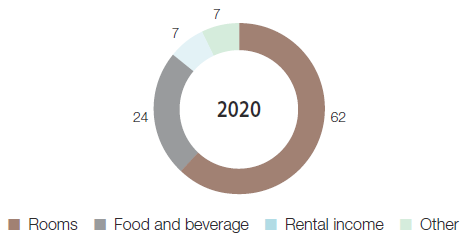 |
|
SOUTH AFRICAN AVERAGE RATE* (R) 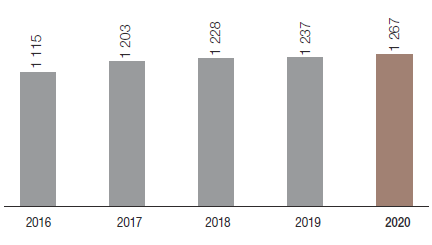 |
SOUTH AFRICAN REVPAR* (R) 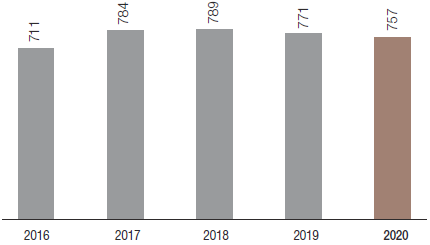 |
|
* South African hotel industry based on STR Global statistics.
 ORGANIC GROWTH
Hotels have high levels of operational gearing due to substantial levels of fixed operating costs. The major driver of long-term organic growth will arise from maximising the revenue generated from the group’s asset base in all macroeconomic circumstances.
Operational overheads must be reviewed and measured for efficiency and to ensure each Rand spent is either in support of the objective of sustainability or growth.
Segmental operating performance
| Income(1) | Ebitdar(2)(3) | Ebitdar margin | |||||||
| Year ended 31 March | 2020 Rm |
2019 Rm |
2020 Rm |
2019 Rm |
2020 % |
2019 % |
|||
|---|---|---|---|---|---|---|---|---|---|
| Manco | 266 | 289 | 154 | 171 | 58 | 59 | |||
| Rental income – Hospitality(5) | 310 | 337 | 310 | 337 | 100 | 100 | |||
| Internally managed | 3 501 | 3 329 | 787 | 839 | 22 | 25 | |||
| Coastal | 1 885 | 1 906 | 463 | 505 | 25 | 26 | |||
| Inland | 1 344 | 1 150 | 262 | 253 | 20 | 22 | |||
| Other(6) | 272 | 273 | 62 | 81 | 23 | 30 | |||
| Offshore | 569 | 605 | 101 | 144 | 18 | 24 | |||
| Internal management fees(4) | (183) | (181) | – | – | – | – | |||
| 4 463 | 4 379 | 1 352 | 30 | 34 | |||||
| (1) | All revenue and income from hotel operations is derived from external customers. No one customer contributes more than 10% to the group’s total revenue. |
| (2) | Refer to reconciliation of operating profit to Ebitdar here. |
| (3) | The adoption of IFRS 16 had no significant impact on Ebitdar. |
| (4) | Included in Manco. |
| (5) | Subsequent to the company’s listing, the CODM refined its assessment of the operational segments to allow for comparability. The CODM now reviews rental income net of rates and taxes expensed by the lessor for segmental reporting purposes. Rates and taxes of R10 million relating to the 2019 financial year were reallocated from Manco to rental income. |
| (6) | Internal management fees amounting to R13 million and relating to the 2019 financial year were reallocated from ‘internally managed – other’ to ‘Manco’. This was done to ensure comparability and that the Ebitdar of the internally managed hotel properties is consistently reported postmanagement fees. |
| KEY PERFORMANCE INDICATORS | |||
| 2020 | 2019 | ||
|---|---|---|---|
| Organic income (reduction) | (3%) | (1%) | |
| Organic Ebitdar (reduction)/growth | (12%) | 7% | |
| Free cash flow | R484 million | R414 million | |
| Maintenance capex | R366 million | R384 million | |
| Adjusted headline earnings per share (‘HEPS’) (reduction) | (31%) | (14%) |
Operational review
Trading for the group’s South African hotels for the year recorded system-wide Revpar flat on the prior year due to a 1% increase in average room rates to R1 105 offset by a 1.1pp decrease in occupancies from the prior year to 62.4% (2019: 63.5%).
The management activities of the South African hotels net of group corporate office costs (including HPF central costs) generated Ebitdar of R154 million (2019: R171 million) for the year, a 10% decrease on the prior year. This performance results from a R23 million decrease in management fee income due to the disappointing performance from the Sandton hotels and Sandton Convention Centre as well as the Tsogo Sun Gaming hotels, offset by a R6 million saving in corporate office costs. The segment’s Ebitdar margin decreased by 1pp from the prior year to 58% (2019: 59%).
Rental income from the 12 externally managed hotel properties owned by HPF of R310 million (2019: R337 million) declined by R27 million from the prior year. This is largely due to the performance of Birchwood Hotel, which saw rental income decline by R12 million compared to the prior year. Given the portfolio’s weighting towards the Cape Town and Gauteng markets and the decline in demand from the international, corporate and leisure segments, compounded by the impact of COVID-19, the balance of the portfolio also performed poorly particularly in the fourth quarter of the year.
Overall, revenue for the South African hotel portfolio owned and leased by the group ended 5% above the prior year at R3.5 billion (2019: R3.3 billion). However, excluding the impact of the Sandton hotels, revenue ended 1% below the prior year. The Cape region benefited from government and associated businesses during the state of the nation address in June 2019 as well as international group and associated businesses relating to the World Economic Forum. The KwaZulu-Natal, inland and other segments struggled in the first nine months of the year, largely due to a lack of government and corporate business as well as a decline in groups and conferencing due to a lack of large events at the Durban International Convention Centre. All regions were severely affected by the impact of COVID-19 in the fourth quarter, which is traditionally a peak trading period for the group. Despite strict cost controls, the shortfall in revenue has resulted in the Ebitdar for the internally managed segment decreasing by 6% on the prior year to R787 million (2019: R839 million) at a margin of 22% (2019: 25%). Excluding the Sandton hotels, Ebitdar for the internally managed segment declined by 12%.
Total income for the offshore division of hotels of R569 million (2019: R605 million) declined by 6% from the prior year. This was exacerbated by the closure of Southern Sun Mayfair, Nairobi, on 31 January 2020, following the end of the property lease period. Once-off closure costs (including termination benefits) of R8 million were incurred by the group and were included in exceptional items as restructuring costs. In US Dollar terms, revenue for the year declined by 14% compared to the prior year, offset by the favourable impact of the weakening of the Rand against the US Dollar. Ebitdar (pre-foreign exchange gains/losses) declined by 24% to R105 million (2019: R138 million). Foreign exchange losses of R4 million (2019: gains of R6 million) were incurred on the translation of offshore monetary items, principally between local country currencies and the US Dollar.
Combined South African and offshore hotel trading statistics, excluding hotels managed on behalf of third-party owners and those managed by third parties in Hospitality, are as follows:
| 31 March 2020 |
31 March 2019 |
||
|---|---|---|---|
| Occupancy (%) | 59.3 | 60.6 | |
| Average room rate (R) | 1 090 | 1 064 | |
| Revpar (R) | 647 | 645 | |
| Rooms available (’000) | 4 314 | 4 239 | |
| Rooms sold (’000) | 2 560 | 2 568 | |
| Rooms revenue (Rm) | 2 791 | 2 732 |
Maintenance capital expenditure
The group invested R366 million on maintenance capex, including major hotel refurbishments at Westin of R70 million and R73 million at Southern Sun Ridgeway in Lusaka.
Looking ahead
Based on current trading levels, the recovery in occupancies to pre-COVID-19 levels is expected to take at least 18 to 24 months. In response to excess supply in the market, and as part of our phased reopening plan, the group only reactivated half of its portfolio in phase 1 under level 3 of the national lockdown, and this could change if demand warrants it. Phase 2 hotels will be reactivated once interprovincial leisure travel is allowed, based on anticipated demand. The remaining hotels are not expected to be reactivated for an extended period of time. These hotels are generally those that are reliant on international inbound travel, large groups and conferencing business. With excess supply in the market and lack of demand, average room rates will be under pressure. We are focused on ensuring that we are the lowest cost operator in the market.
INORGANIC GROWTH
Inorganic growth will be a combination of capacity increases in existing businesses, greenfield developments in new markets and acquisitions within the group’s core competencies. In all situations, disciplined due diligence and feasibility are critical to ensure the success of growth projects.
The propensity for growth projects to absorb financial and human resources must be carefully evaluated within the group’s capacity tolerances as these can impact some of the pillars of sustainability.
Investment activity expenditure
| 31 March 2020 Rm |
31 March 2019 Rm |
||
|---|---|---|---|
| Southern Sun Pretoria | 200 | – | |
| Riverside Conference Centre | 11 | – | |
| StayEasy Maputo | – | 52 | |
| hi Hotels | – | 10 | |
| Expansion capex | 211 | 62 | |
| Investment activity expenditure | 211 | 62 |
Looking ahead
In this constrained growth environment and with the group utilising available cash and debt facilities to fund operations while the economy recovers from the impact of COVID-19, inorganic growth is not our focus for the medium term.