Integrated Annual Report | 2023


Laurelle McDonald, Chief Financial Officer
THE RESULTS PRESENTED IN THIS INTEGRATED ANNUAL REPORT REFLECT THE IMPACT OF CONTINUED RECOVERY IN TRADING LEVELS, PARTICULARLY IN THE SECOND HALF OF THE YEAR, AS LOCAL AND INTERNATIONAL TRAVEL PATTERNS NORMALISED AND DEMAND FOR CONFERENCING AND EVENTS INCREASED.
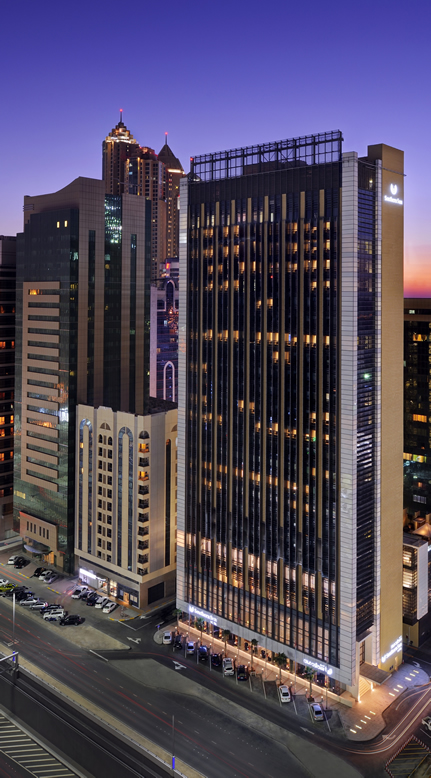
All regions performed well and exceeded FY20 (pre-Covid-19) levels except the outer Sandton node, reflecting the delayed recovery in corporate transient travel exacerbated by many companies in the node still operating a hybrid remote-working model.
Excluding the once-off payment of R399 million received from Tsogo Sun Gaming Limited (TSG) on implementation of the Separation agreement (Separation payment), the group achieved total revenue (including discontinued operations) for the year ended 31 March 2023 of R5.1 billion (FY22: R2.7 billion), a growth of 87.6% on FY22 and 13.5% above FY20 revenue of R4.5 billion. Similarly, the group generated Ebitdar (including discontinued operations) of R1.4 billion (FY22: R590 million), significantly higher than FY22 and a growth of 6.2% on FY20 Ebitdar of R1.35 billion. This performance is particularly encouraging considering group occupancy of 51.5% (FY22: 30.6%) for the FY23 year is well below the 59.3% achieved in FY20.

In addition, the group has grown average room rates (ARR) by 18.3% and 16.3% from FY22 and FY20, respectively. This is mainly attributable to ARR growth in the group’s core portfolio as well as the consolidation of luxury properties with higher ARRs such as The Westin Cape Town, Arabella Hotel, Golf & Spa and Mount Grace Hotel & Spa that were previously treated as investment properties. Luxury hotel guests have proven more resilient to prevailing economic pressures such as inflation and rising interest rates, being influenced more by location and personal preference rather than price. Having reduced the group’s operational gearing through the cost restructuring undertaken during Covid-19, the flow-through from revenue growth to Ebitdar has improved, positively impacting profitability despite lower occupancy.
The group’s Ebitdar margin of 28.3% (excluding the Separation payment) is well above the prior year margin of 21.8% but below FY20 because of the consolidation of hotels previously treated as investment properties.
Notwithstanding the upward trend in trading and return to normalised travel patterns, the group remains heavily exposed to the South African economy which faces slow GDP growth, high unemployment and a lack of policy certainty and solutions to the country’s ongoing energy crisis from government. The continuous load shedding has a detrimental impact on consumer and corporate sentiment.
The group has spent R41 million on diesel in FY23 to power its owned hotels compared to R10 million in FY22 and R11 million in FY20. While not specifically tracked, the group has also seen consistent increases in repairs and maintenance, some of which would relate to generator and other equipment faults caused by load shedding. Repairs and maintenance costs in FY23 of R159 million (FY22: R103 million) has increased by 54.4% and 15.2% on FY22 and FY20, respectively.
Given our learnings from the pandemic, the group can quickly reduce costs in response to revenue contraction and after the refinancing of the group’s debt package and significantly reduced debt levels, a short to medium-term retraction in occupancy no longer poses an existential threat to the group. We will continue the discipline of managing cash flow and liquidity closely and maintaining the cost efficiencies achieved while at the same time focusing on the completion of various refurbishment projects that were placed on hold, particularly at flagship properties so that we avoid downtime during high-demand periods.
JA Copelyn (Chairman)*
MN von Aulock (Chief Executive Officer)
L McDonald (Chief Financial Officer)
MH Ahmed (Lead Independent)*#
SC Gina*#
ML Molefi#
JG Ngcobo*#
JR Nicolella*
CC September*#
*Non-executive. #Independent.
LR van Onselen for Southern Sun Secretarial Services Proprietary Limited
4th Floor, South Tower, Nelson Mandela Square
Cnr 5th and Maude Streets, Sandton, 2196
(Private Bag X200, Bryanston, 2021)
JSE Investor Services Proprietary Limited
(previously Link Market Services South Africa Proprietary Limited), 13th Floor,
Rennie House, 19 Ameshoff Street,
Braamfontein, 2001
(PO Box 4844, Johannesburg, 2000)
Investec Bank Limited, 100 Grayston Drive,
Sandown, Sandton, 2196,
South Africa
Nedbank Limited
(Registration number 1966/010630/06)
1st Floor, Corporate Park, Nedcor Sandton,
135 Rivonia Road, Sandown, Johannesburg, 2196
(PO Box 1144, Johannesburg, 2000)
PricewaterhouseCoopers Inc., 4 Lisbon Lane,
Jukskei View, 2090 (Private Bag X36, Sunninghill, 2157)
